
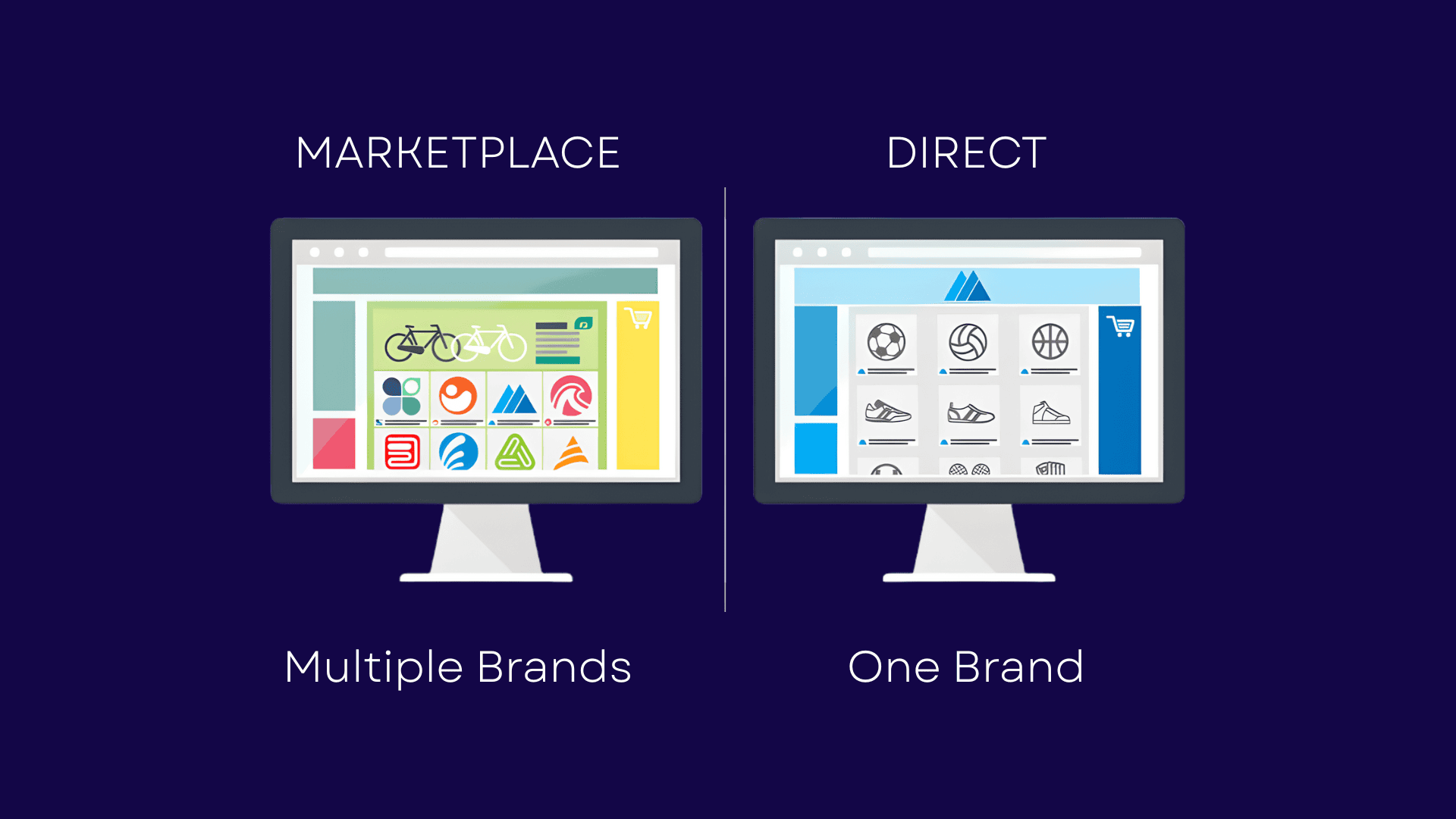
In the digital economy of 2026, the question is no longer “Should we sell online?” but rather “Where should our transaction layer sit?”
For the past decade, e-commerce strategy has been defined by a binary choice: the vast, aggregated traffic of marketplaces (typified by Amazon) versus the brand autonomy of Direct-to-Consumer (DTC) channels (typified by Shopify). While early e-commerce philosophy often pitted these two against one another as mutually exclusive ideologies, the mature landscape of 2026 requires a more nuanced, portfolio-based approach.
This article provides a formal analysis of the operational, financial, and strategic implications of both channels. We will evaluate the pros and cons of the “Rent vs. Own” models to assist stakeholders in making data-driven infrastructure decisions.
The Marketplace Model: Amazon
Amazon remains the undisputed search engine of commerce. In 2026, it is estimated that over 60% of product searches originate directly on Amazon, bypassing traditional search engines entirely.
For brands, Amazon acts as a high-volume distributor where the primary currency is price and logistical speed, rather than brand narrative.
The Advantages (Pros)
- Unparalleled Traffic Volume and Velocity: The most significant barrier to entry for any online business is traffic generation. On Amazon, traffic is inherent. The platform provides access to billions of visits per month. For commoditised goods or products with high search intent (e.g., “charging cable,” “vitamin C serum”), Amazon offers immediate visibility that would take years to build on an independent domain.
- Conversion Rate Optimisation (CRO): Amazon has perfected the checkout flow. With the “Buy Now” one-click functionality and the trust signals associated with Prime membership, Amazon boasts conversion rates that significantly outperform the industry average for independent sites. The friction of account creation and payment entry is removed, leading to higher velocity sales.
- Logistical Infrastructure (FBA): Fulfilment by Amazon (FBA) allows brands to outsource the most complex aspect of e-commerce: logistics. By leveraging Amazon’s warehousing and last-mile delivery network, small teams can achieve enterprise-level distribution speeds (often same-day delivery in major metros) without capital expenditure on warehouses.
The Disadvantages (Cons)
- Lack of Data Ownership: This is the critical strategic vulnerability. On Amazon, the customer belongs to Amazon, not the brand. You do not receive email addresses or detailed demographic data. This prevents the creation of retargeting loops, email marketing flows, and Lifecycle Marketing (LTV) strategies. You are essentially a wholesale supplier to Amazon’s platform.
- Brand Dilution and Commoditisation: The Amazon interface is designed to strip away unique branding. Your product is presented in a standardised grid alongside competitors. This environment trains consumers to compare based on price and review count rather than brand ethos or quality. It is a “race to the bottom” regarding pricing power.
- Platform Risk and Governance: Building a business solely on Amazon is building on rented land. Algorithm changes, fee hikes, or account suspensions (even erroneous ones) can halt revenue overnight. Furthermore, successful products are often cloned by competitors or, historically, by Amazon’s private label brands.
The DTC Model: Shopify
If Amazon is a digital department store, a Shopify storefront is a flagship boutique. It represents the Direct-to-Consumer (DTC) ethos, prioritising brand equity, customer data, and long-term relationship building.
The Advantages (Pros)
- First-Party Data and CRM Control: In a post-cookie world, first-party data is a company’s most valuable asset. Selling via Shopify allows you to capture the customer’s identity, email, phone number, and purchase history. This data enables high-margin retention marketing strategies – such as email flows, loyalty programmes, and SMS marketing – which are essential for maximising Customer Lifetime Value (CLV).
- Brand Immersion and Control: On your own domain, you control the pixel. Every aspect of the user experience (UX) – from typography and photography to the unboxing upsells and post-purchase support – can be curated to convey premium value. This control allows for higher price points and stronger emotional connection with the consumer.
- Margin Protection: While customer acquisition is expensive (see below), the unit economics of a repeat purchase on Shopify are superior. You avoid the 15%+ referral fees and FBA fulfilment fees associated with Amazon. For brands with high repeat purchase rates (consumables like coffee, skincare, supplements), DTC offers a path to higher long-term profitability.
The Disadvantages (Cons)
- The Burden of Traffic Generation: A Shopify store has zero inherent traffic. You must pay for every visitor, whether through Meta ads, Google PPC, influencer partnerships, or SEO. In 2026, as Customer Acquisition Costs (CAC) on paid social remain high, the “tax” of driving traffic can often exceed the fees one would pay to Amazon.
- Logistical Complexity: You are responsible for fulfilment. Whether you handle this in-house or hire a Third-Party Logistics (3PL) provider, you must manage inventory, shipping carriers, returns, and customer service inquiries regarding lost packages. This operational overhead distracts from core competencies like product development and marketing.
- Trust and Friction: New customers are inherently sceptical of unknown websites. Unlike Amazon, where trust is centralised, a standalone DTC site must work harder to prove legitimacy. Lack of recognisable trust badges or a slightly clunky checkout process can result in high cart abandonment rates.
Strategic Synthesis: The Hybrid Approach
For most mature brands in 2026, the decision is rarely binary. The industry standard has shifted toward a “Hybrid Strategy” that leverages the strengths of both platforms while mitigating their weaknesses.
The “Acquisition vs. Retention” Split
Many successful brands utilise Amazon as a top-of-funnel Acquisition Channel and Shopify as a Retention Channel.
- The Tactic: A customer discovers the brand on Amazon while searching for a generic solution. They purchase a “starter” product. Inside the packaging, an insert offers a discount or exclusive content redeemable only on the brand’s direct website (Shopify).
- The Goal: To migrate the customer from the “rented” audience of Amazon to the “owned” audience of the DTC site for their second, third, and fourth purchases.
Category-Specific Strategy
- Commodity/Utility Products: If you sell HDMI cables or batteries, Amazon should be your primary focus. The purchase is transactional, and brand loyalty is low.
- Lifestyle/Aspirational Products: If you sell high-end fashion or luxury wellness products, Shopify should be your primary focus. The purchase is emotional, and the brand experience is the product.
Financial Implications: A Comparative P&L View
When evaluating the two channels, one must look beyond the top-line revenue and analyse the Net Margin contribution.
| Cost Centre | Amazon (FBA) | Shopify (DTC) |
| Platform Fees | High (~15% Referral Fee) | Low (Monthly SaaS + Transaction Fees) |
| Fulfilment Costs | Variable (FBA Fees), generally efficient for small items | Variable (3PL or In-house), often higher for single units |
| Marketing Costs | Amazon PPC (High intent, often lower CAC) | Social/Search Ads (Lower intent, high CAC) |
| Customer LTV | Low (Difficult to resell to the same user) | High (Email/SMS marketing has near-zero cost) |
| Net Result | Volume Play: Lower margin % but higher immediate velocity. | Value Play: Higher potential margin % over the lifetime of the customer. |
The choice between Amazon and Shopify is not a choice between two websites; it is a choice between two fundamental business models.
Amazon is a volume distributor that demands operational efficiency and pricing aggression. It is the best place to harvest existing demand. Shopify is a brand-building platform that demands marketing excellence and community management. It is the best place to generate demand and nurture loyalty.
In 2026, the most resilient brands do not choose one over the other. They build an ecosystem where the marketplace provides cash flow and brand awareness, while the direct channel builds enterprise value and customer data.
Evaluating Your Channel Mix?
Determining the correct split between marketplace presence and direct-to-consumer infrastructure requires a deep audit of your product margins, supply chain, and long-term brand goals. There is no one-size-fits-all solution.
Whether you need to optimise your marketplace margins or build a data-rich direct-to-consumer channel, book a free consultation call with us today – our team is here to help you build a commerce ecosystem that is both profitable and sustainable.