
In the battle for consumer attention, the eyes have always been the primary prize. We have spent the last decade obsessing over pixels, optimising banner blind spots, colour-grading Instagram Reels, and debating the merits of serif versus sans-serif fonts. We live in a culture of visual saturation, where the average person is bombarded with thousands of images per day until they develop a protective layer of “banner blindness.”
But while the eyes are exhausted, the ears remain wide open.
In 2026, we have entered the Golden Age of Audio. Thanks to the ubiquity of high-fidelity wireless earbuds (like the latest AirPods Pro) and the dominance of smart speakers in the home, audio has become the constant soundtrack of our lives. It is “companion media.” We listen while we commute, while we cook, while we work out, and while we try to fall asleep. Unlike video, which demands 100% of our focus, audio is invited into the intimate, quiet moments of the day where screens are forbidden.
For brands, this represents a massive, largely untapped arbitrage opportunity. Platforms like Spotify, Apple Podcasts, and Amazon Music offer access to an audience that is captive, engaged, and literally has your brand whispering inside their head.
However, the transition from visual to audio advertising is not a simple copy-paste job. You cannot take the audio track from your TikTok video and run it as a Spotify ad. It will fail. Visual ads rely on the screen to do the heavy lifting; audio ads rely entirely on the listener’s imagination.
To win in this medium, you must master the “Theatre of the Mind.” This guide explores the unique mechanics of scriptwriting for non-visual media and how to build a sonic identity that cuts through the noise.
The Problem with “Radio Voice”
The first hurdle to overcome is the legacy of terrestrial radio. For 50 years, radio ads sounded exactly the same: a high-energy, deep-voiced announcer shouting at you about a car dealership sale, backed by generic rock music and cheesy sound effects.
If you run an ad like that on Spotify in 2026, you will be hated.
The modern audio environment is intimate. Users are not listening through a crackly car dashboard; they are listening through noise-cancelling headphones directly into their ear canal. A shouting “Radio Voice” feels like an assault. It feels like an intrusion into a private space.
The most effective audio creatives today do not sound like ads at all. They sound like conversations. They use “peer-to-peer” voice acting – voice actors who sound like normal people, with vocal fry, pauses, and natural intonation. They speak at a volume appropriate for a dinner table, not a stadium.
This shift in tone requires a shift in scripting. You cannot write a wall of text. You have to write for the breath. You have to leave space for the silence. In audio, silence is your white space. A two-second pause before the tagline can command more attention than ten seconds of shouting.
Writing for the “Theatre of the Mind”
The distinct advantage of audio is that it has an unlimited budget for special effects. If you want to shoot a TV commercial set on a spaceship, it will cost you millions in CGI. If you want to create a radio ad set on a spaceship, it costs you 50€ for a good sound effect (SFX).
This is the concept of the “Theatre of the Mind.” You provide the acoustic cues, and the listener’s brain paints the picture. This internal visualisation is often more powerful than any video because it is co-created by the consumer.
Consider a script for a coffee brand.
- The Lazy Script: (Voiceover) “Wake up with BrewMaster Coffee. It’s rich, dark, and delicious. Buy it today.”
- The Theatre Script: (SFX: The distinct pop of a vacuum-sealed bag opening. The glug-glug of hot water pouring. A deep exhale of satisfaction.) (Voiceover, soft): “That smell? That’s the reason you get out of bed.”
The second script triggers a sensory memory. It transports the listener to their kitchen. It relies on Sonic Branding – using specific sounds to trigger emotional associations.
Brands need to audit their “Sonic Assets.” What does your brand sound like? Is it the crisp crack of a soda can? The heavy thud of a luxury car door closing? The typing of a mechanical keyboard? These sounds are your logo. Use them early, and use them often.
The 30-Second Constraint and the “Skip” Button
On platforms like Spotify, the standard ad unit is 30 seconds. In some formats, it is non-skippable (the user must listen to resume music). In others (podcasts), they can skip 15 seconds forward.
This creates a binary challenge: You must hook them instantly to prevent the mental “tune-out,” but you also cannot be so annoying that they rip their headphones off.
- The First 3 Seconds (The Sonic Hook): You do not have time for a slow fade-in. You need a “Sonic Hook” immediately. This could be a startling sound (a glass breaking), a question, or a piece of music that matches the tempo of the playlist they were just listening to.
- The Contextual Relevance: Spotify allows for incredible targeting based on Context, not just demographics. You can target users based on the playlist category they are listening to. This is where dynamic scriptwriting shines.
- Ad for the “Workout” Playlist: High tempo, high energy. “Push through the last mile. You’ve got this. And when you’re done, refuel with…”
- Ad for the “Chill/Focus” Playlist: Low tempo, soft voice, minimal music. “Focus is hard to find. We can help you keep it…”
If you disrupt a “Meditation” playlist with a high-energy techno track, you have failed the context test. You have broken the user’s flow, and they will resent you for it.
The Call to Action (CTA) Dilemma
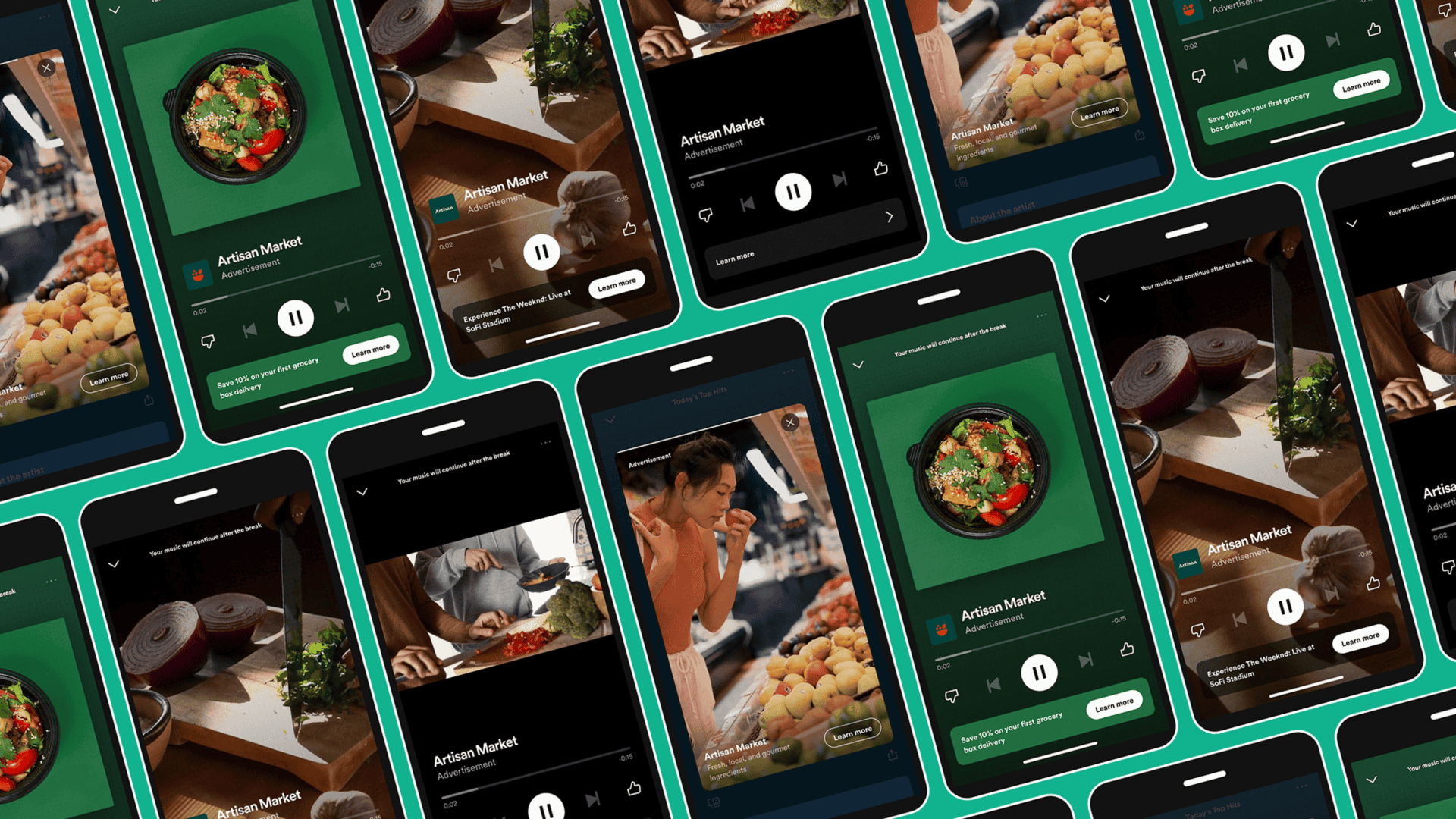
The biggest structural weakness of audio advertising is the lack of a “Click.” Yes, Spotify displays a “Companion Banner” on the phone screen with a clickable button. But in reality, 80% of listeners cannot click. Their phone is in their pocket, they are driving a car, or they are washing dishes.
You cannot rely on a direct click. You must rely on Memory.
This changes how you write the Call to Action. A complex URL like brand.com/summer-sale-2026-discount is useless. Nobody will remember it. You have three options:
- The Vanity URL: Brand.com/Yes. Short, punchy, easy to spell.
- The Promo Code: “Use code SPOTIFY.” This is easier to remember than a URL.
- The Brand Awareness Play: Accept that they won’t click now. Your goal is simply to plant the seed so that later, when they are at a computer, they Google your brand name. In this case, the script should repeat the Brand Name at least three times to ensure phonetic recall.
Podcast Reads: The “Influencer” of Audio
Within the audio ecosystem, Podcasts occupy a special tier. They are the highest-trust medium in existence. Listeners form “Parasocial Relationships” with podcast hosts. They feel like they know them.
There are two types of podcast ads:
- Pre-Recorded (Programmatic): This is your standard 30-second ad inserted into the break. It sounds like an ad.
- Host-Read: This is where the host pauses the show and talks about your product in their own voice.
In 2026, Host-Read ads are significantly more expensive, but they deliver 3x to 4x the ROI. Why? Because it is not an ad; it is an endorsement. It borrows the trust of the host.
When scripting for a Host-Read, do not write a script. Write “Talking Points.” Give the host bullet points: “Mention that it’s vegan. Mention that you used it last week. Mention the 20% discount.” Then, let them riff. Let them stumble. Let them make a joke. The imperfections make it feel authentic. If you force a podcaster to read a rigid corporate script, the audience hears the shift in tone and tunes out.
3D Audio and The Future
As we look forward, the technology of audio is evolving. Spotify and other platforms are rolling out 3D Audio (or Binaural Audio) ads. Using head-tracking technology in earbuds, these ads place sound in physical space. A whisper can feel like it’s coming from behind you. A car can sound like it drives from your left ear to your right ear.
For brands, this offers a new dimension of immersion. An ad for a travel agency could simulate the sounds of a jungle all around the listener. An ad for a horror movie could make the listener check over their shoulder. This is not just advertising; it is a sensory experience.
The Silent Power
Audio is often the last line item on a media plan, treated as an afterthought to the “real” video campaign. This is a strategic error. Audio is the only medium that can reach your customer when they are physically busy but mentally available. It is the only medium that literally whispers in their ear.
But the privilege of that intimacy comes with a responsibility. You cannot pollute that space with noise. You must enter it with a story. You must respect the theatre of the mind.
Does your brand have a voice, or just a logo?
Most companies have a 50-page Brand Guidelines document covering fonts and colours, but they have zero strategy for how they sound. At our agency, we employ scriptwriters who specialise in non-visual media. We know how to write for the ear, how to direct voice talent to sound human, and how to build sonic identities that stick.
If you are ready to capture the attention of the screenless consumer, book a call with our experts today. Let’s make some noise.