
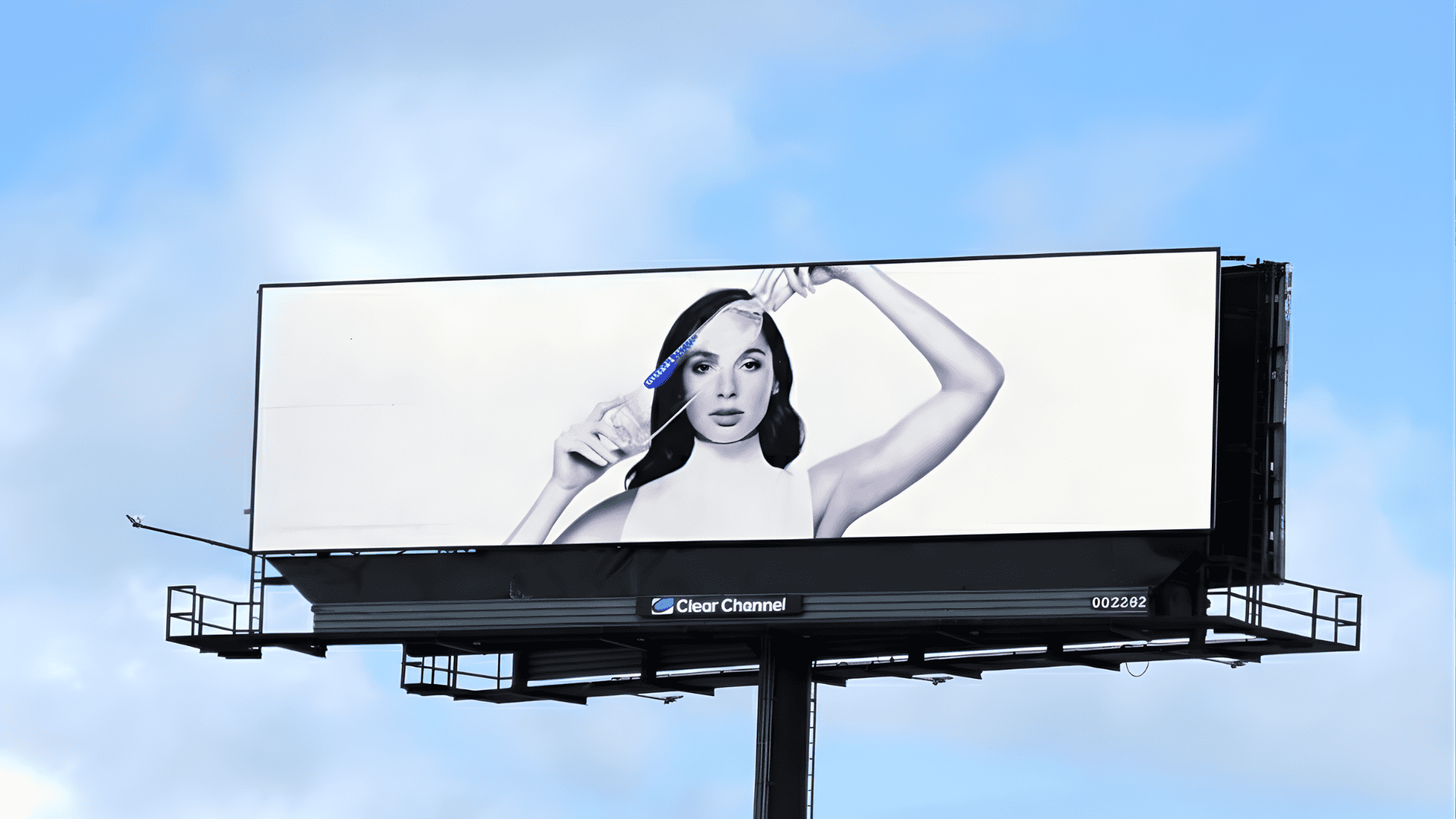
For the vast majority of marketing history, the billboard was a fortress of exclusivity. Standing tall over highways, city centres, and transit hubs, these massive canvases were the reserved territory of the Fortune 500. The barriers to entry were financial and logistical: long-term contracts, five-figure production costs for vinyl printing, and the requirement to buy “share of voice” in massive, inflexible blocks. For the small-to-medium business (SMB), the billboard was an ego play – something you did if you had money to burn, not if you needed measurable growth.
In 2026, that fortress has crumbled.
The digitisation of the physical world has democratised the oldest form of advertising. The shift from static vinyl to digital screens, combined with the integration of Programmatic Buying technology, has fundamentally altered the economics of Out-of-Home (OOH) media. Today, a local coffee roaster, a boutique law firm, or a regional B2B software consultancy can access the same premium inventory as Coca-Cola or Nike, without the six-month contract or the massive upfront capital.
This is the era of Programmatic Digital Out-of-Home (pDOOH). It allows brands to buy ads on physical screens with the same agility, targeting, and data-driven precision they use to buy ads on Facebook or Google. For the SMB, the screen on the bus shelter or the digital board on the highway is no longer a static monument; it is a dynamic extension of their digital funnel.
The Mechanism of Democratisation
To understand why this opportunity exists, one must understand the shift in the buying mechanism. Traditionally, buying a billboard meant calling a sales rep, negotiating a price for a specific location for four weeks, and hoping the right people drove past.
Programmatic DOOH replaces this manual friction with automation. Through a Demand Side Platform (DSP), advertisers can bid on inventory in real-time. You are not buying the screen; you are buying the audience in front of the screen at a specific moment.
This introduces the concept of “Micro-Buys.”
- The Old Way: You must buy this billboard for 30 days, 24 hours a day. Cost: 15.000€.
- The New Way: You want to buy this billboard, but only on Tuesdays and Thursdays between 8:00 AM and 10:00 AM, when commuter traffic is heaviest. Cost: 400€.
This flexibility is revolutionary for smaller budgets. It allows an SMB to be “big” exactly when it matters, and invisible when it doesn’t. A lunch spot can burn 100% of its budget between 11:00 AM and 1:00 PM within a three-block radius, dominating the visual landscape during the decision-making window, without wasting a cent on the midnight crowd.
Targeting Beyond Geography
The sophistication of pDOOH lies in its data layers. While you cannot target an individual on a billboard (due to privacy laws and logistical reality), you can target Contextual Crowds.
In 2026, digital screens are smart. They ingest real-time data feeds that allow for “Trigger-Based” advertising. This capability transforms the ad from a static image into a responsive service.
Weather Triggers A local HVAC repair company can set a campaign to go live only when the local temperature exceeds 32°C. The creative simply reads: “AC broken? We can be there in an hour.” The ad spend is paused automatically when the temperature drops. This ensures that every dollar spent captures high-intent urgency.
Traffic Triggers A podcast network or an audiobook service can trigger ads on highway digital boards only when the traffic speed drops below 20 mph. When the commute is smooth, the ad stays dark. When the gridlock hits, the ad appears: “Stuck in traffic? Make it productive. Listen now.”
Dayparting and Lifestyle For B2B companies, the strategy involves “chasing the suit.” You might target screens in the financial district only during morning commutes and lunch hours, then shift that budget to screens in high-end residential areas or airports on Friday evenings. You are following the persona through their physical day.
The “Trust” Premium in a Digital World
Why should an SMB invest in physical screens when digital ads are cheaper? The answer lies in Perceived Legitimacy.
The digital ecosystem of 2026 is fraught with scepticism. Consumers are bombarded with AI-generated spam, fraudulent dropshipping ads, and privacy-invasive tracking. A banner ad on a website is cheap, but it is also low-trust. It feels ephemeral.
Physical presence carries weight. When a consumer sees a brand on a billboard or a digital kiosk, the psychological signal is: “This is a real company.” It implies solvency and permanence. For a local SMB, this “Trust Premium” is a competitive moat. If a homeowner is looking for a contractor, seeing a brand on a digital board in their neighbourhood validates that business in a way that a Google Search text ad cannot. It creates a “Fame Effect” – the perception that the brand is a market leader, regardless of its actual size.
Omni-Channel Integration: The Retargeting Loop
The most powerful application of DOOH for SMBs is not as a standalone channel, but as a primer for mobile conversion. This is the “Prime and Remind” strategy.
DOOH is a “One-to-Many” medium. It builds awareness. Mobile is a “One-to-One” medium. It captures action.
- The Geofencing Play: An SMB can draw a virtual perimeter around the location of their digital billboards. When a user enters that zone and is exposed to the OOH ad, their mobile Device ID is anonymised and added to a retargeting pool.
- The Follow-Up: Later that evening, when the user is scrolling Instagram or reading the news on their phone at home, they are served a direct-response ad from the same brand.
The performance of the mobile ad invariably skyrockets. Why? Because the user effectively recognises the brand from the physical world. The billboard warmed them up; the phone closed the deal. This integrated approach lowers the overall Customer Acquisition Cost (CAC) by increasing the Click-Through Rate (CTR) of the digital, lower-funnel assets.
Measurement: Moving Beyond “Estimated Views”
The historical hesitation for SMBs entering the OOH space was attribution. “How do I know it worked?” was the unanswerable question.
In 2026, pDOOH offers measurement metrics that rival digital channels. We are no longer counting cars; we are tracking behaviours.
Footfall Attribution Using aggregated, anonymised mobile location data, we can measure “Lift.” We can track a group of devices exposed to a billboard and compare their visitation rate to your physical store against a control group that did not see the billboard.
The Metric: “Users who saw the ad were 1.4x more likely to visit the showroom within 7 days.”
Web Lift For online-only SMBs, we measure the spike in direct website traffic or branded search queries in the specific postcodes where the OOH campaign is active. If you activate screens in Austin, Texas, and see a 20% lift in organic traffic from Austin IP addresses, that is a direct correlation.
Creative Strategy: The 3-Second Rule
Access to the inventory is only half the battle. The other half is the creative. SMBs often make the mistake of repurposing a social media flyer for a billboard. This fails.
A billboard is not a brochure. It is a visual shout.
- The Rule of 3: You have 3 seconds of attention. You can communicate one image, one headline (maximum 7 words), and one logo. That is it.
- Contrast is King: High-contrast colours (Black on Yellow, White on Blue) perform best. Subtle pastels or complex gradients get lost in the visual noise of the city.
- Contextual Relevance: The best SMB creative calls out the location. “Hello, Brooklyn” or “2 Miles to the Best Pizza in Town” works significantly better than generic messaging because it grounds the ad in the viewer’s immediate reality.
The Budget Reality: Starting Small
So, what does this actually cost?
In the programmatic environment, there are no minimum spend floors (though practically, you need enough to generate data). An SMB can execute a highly effective, hyper-local pDOOH test campaign for 2.000€ to 5.000€.
This budget would likely purchase zero permanent static billboards. But programmatically, it could buy tens of thousands of premium impressions on bus shelters, gym screens, and highway boards, delivered surgically during peak hours over a two-week period.
This allows for an “Always-On” strategy. Instead of blowing the annual marketing budget on one month of static heavy-up, an SMB can maintain a low-level “pulse” of presence throughout the year, ramping up spend only during sales events or peak seasons.
The Physical World is the New Frontier
As the digital space becomes increasingly crowded, expensive, and regulated, the physical world is experiencing a renaissance. The streets are the last place where ad-blockers do not exist.
For the small business owner, the digital billboard represents a levelling of the playing field. It is a chance to project the image of a major enterprise while spending with the efficiency of a startup. It is no longer a question of if you can afford to be on the big screen; it is a question of whether you can afford to let your competitors own the view.
Navigating the DSP landscape and selecting the right inventory requires a strategic eye. It is not just about picking a location; it is about designing an audience architecture that bridges the gap between the commute and the checkout.
Whether you are a local retailer looking to drive foot traffic or a B2B firm aiming to build brand authority in specific business districts, book a free consultation call with us today. Our team is here to help you turn the physical world into your highest-performing channel.